
The opportunity
A Homeowner Called Us About an Already-Listed Property
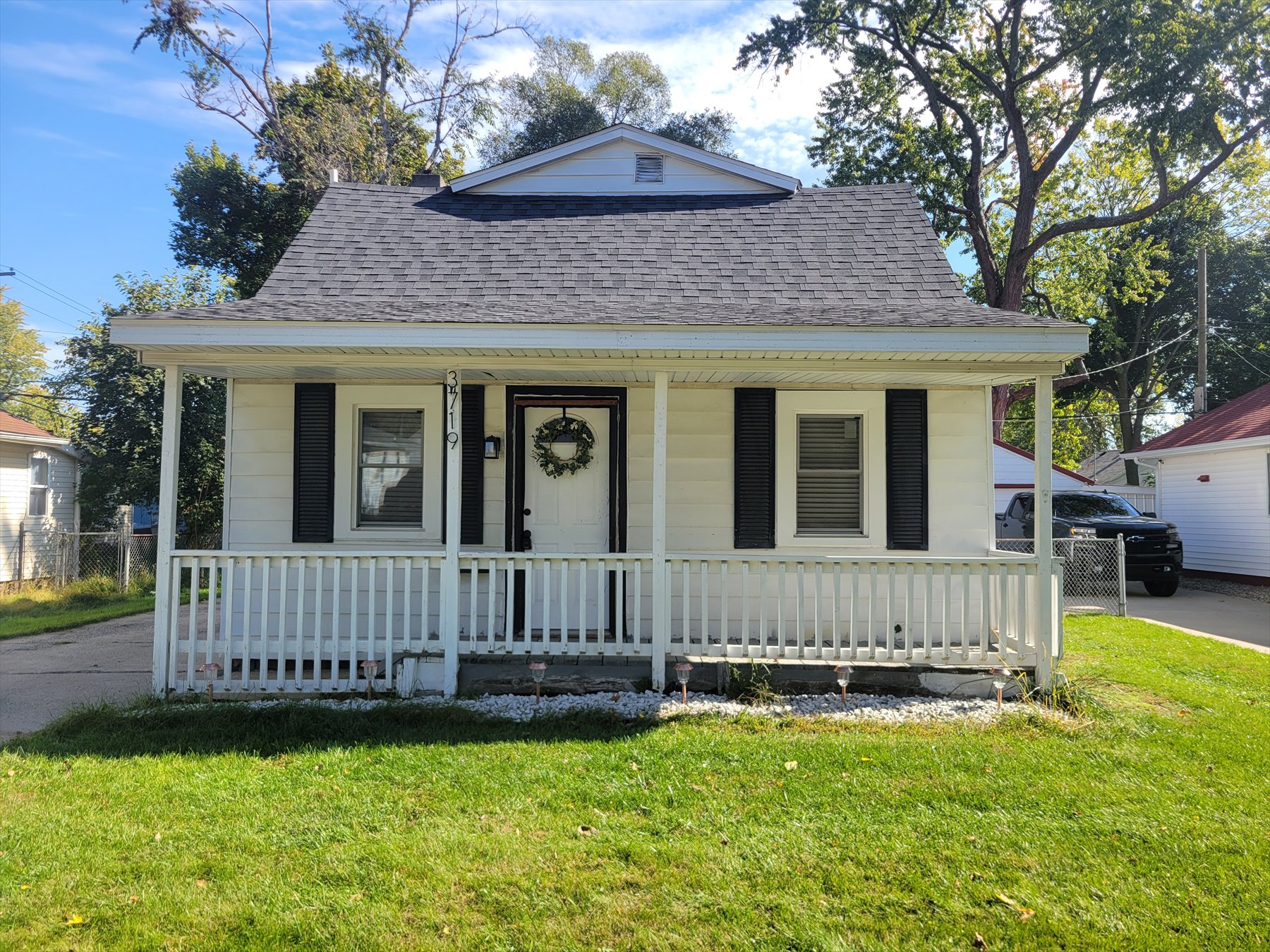
We Buy Lansing receives acquisition opportunities in different ways. In this case, the homeowner contacted us directly while 3719 Homewood was already listed with a real estate agent.
The public asking price was $94,900. The property had been marketed for several months, and the homeowner reported that two previous purchase offers had fallen through. She described the house as “turnkey ready” and indicated a price she would consider.
An active listing does not automatically eliminate a property from investor consideration. It does mean the seller and buyer need to respect any existing listing agreement and coordinate appropriately with the licensed professionals involved. Our role was to decide whether the property fit our acquisition criteria.
We reviewed the MLS details, property photographs, seller's disclosures, available property and building records, and relevant local rental and resale information. The initial numbers were interesting enough to justify an on-site evaluation.
We don't arrive at an offer by applying an arbitrary percentage to the asking price. We evaluate the property, the risks, and the return the investment would need to support.
1 · Preliminary financial screen
The Initial Rental Numbers Looked Interesting
We first evaluated 3719 Homewood as a potential long-term rental. At the basis we were considering, the house showed enough potential to warrant further due diligence.
| Component | Amount |
|---|---|
| Conditional purchase offer | $60,000 |
| Preliminary structural repair allowance | $30,000 |
| Total projected acquisition and repair basis | $90,000 |
| Estimated stabilized property value | $120,000 |
| Potential equity spread | $30,000 |
The repair allowance was a preliminary underwriting assumption, not a structural engineer's determination or contractor's estimate. The stabilized value was our assumption, not an appraisal. The $90,000 basis is simplified and is not a fully loaded closing-cost estimate.
Monthly Operating Assumptions
| Component | Monthly amount |
|---|---|
| Gross rent | $1,200 |
| Maintenance | − $200 |
| Management | − $150 |
| Property taxes | − $400 |
| Vacancy allowance | − $50 |
| Insurance | − $100 |
| Net operating income | $300 |
Gross rental yield compares the $14,400 of annual scheduled rent with the $90,000 acquisition-and-repair basis before operating expenses. Net operating income, or NOI, is what remains after the operating allowances shown above. The initial unlevered cash yield compares the $3,600 annual NOI with the same basis, before any debt financing.
These measures describe different parts of the investment. The gross yield showed useful income relative to basis, but the operating yield was only 4%. Much of the investment thesis therefore depended on acquiring below our estimated stabilized value and resolving the structural concerns within budget.
2 · On-site observations
What We Observed at the Property
The initial financial screen justified a visit. The visit changed the risk assessment.
Exterior and Water Management
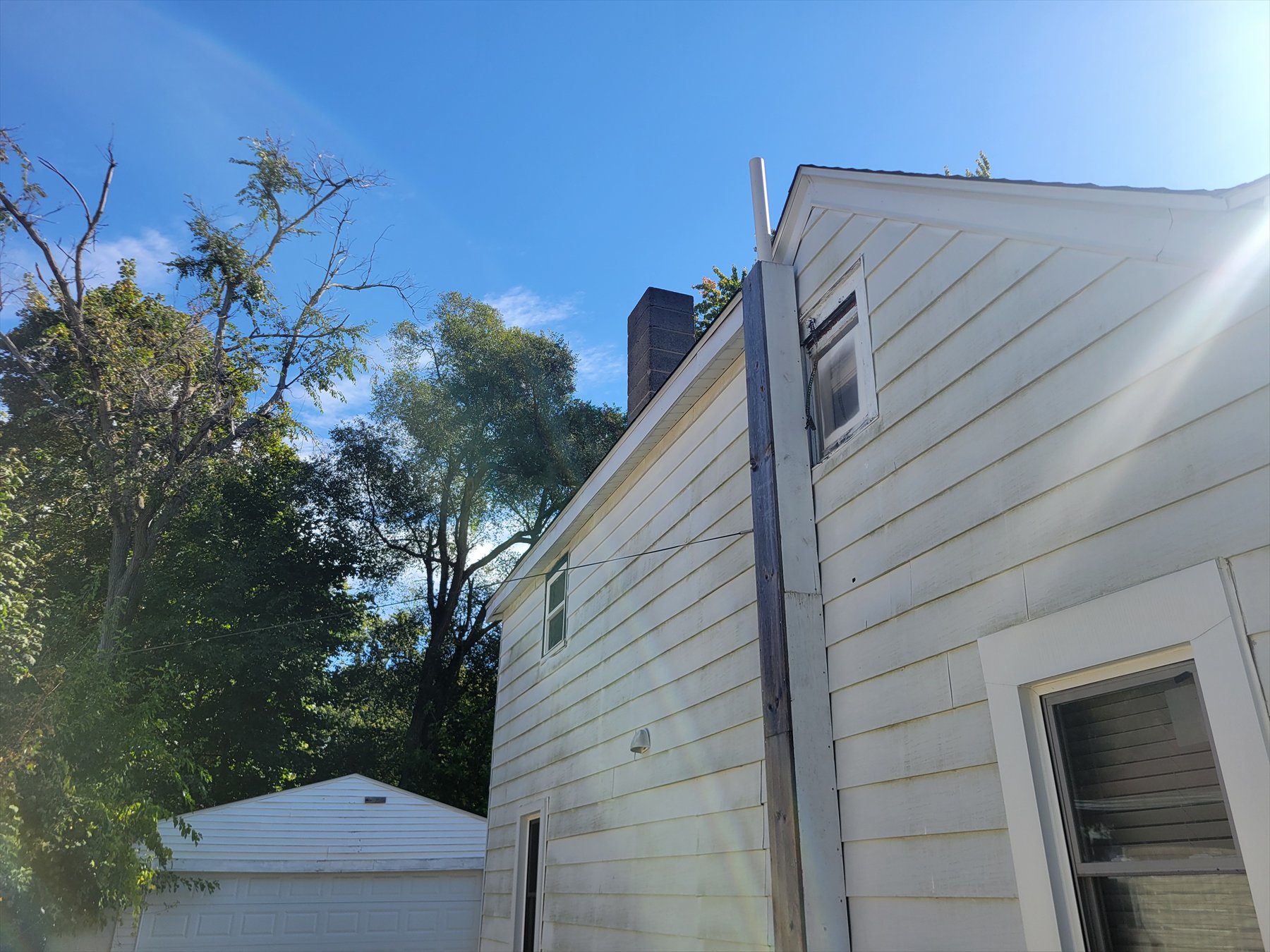
Outside, we observed deferred maintenance, missing gutters, and a concrete driveway that appeared to slope toward the house. We also saw evidence of work intended to manage water around the building.
Water management matters when evaluating basement and foundation risk. These observations did not prove that the driveway caused water intrusion or structural damage. They told us that drainage and moisture history deserved more investigation.
Interior
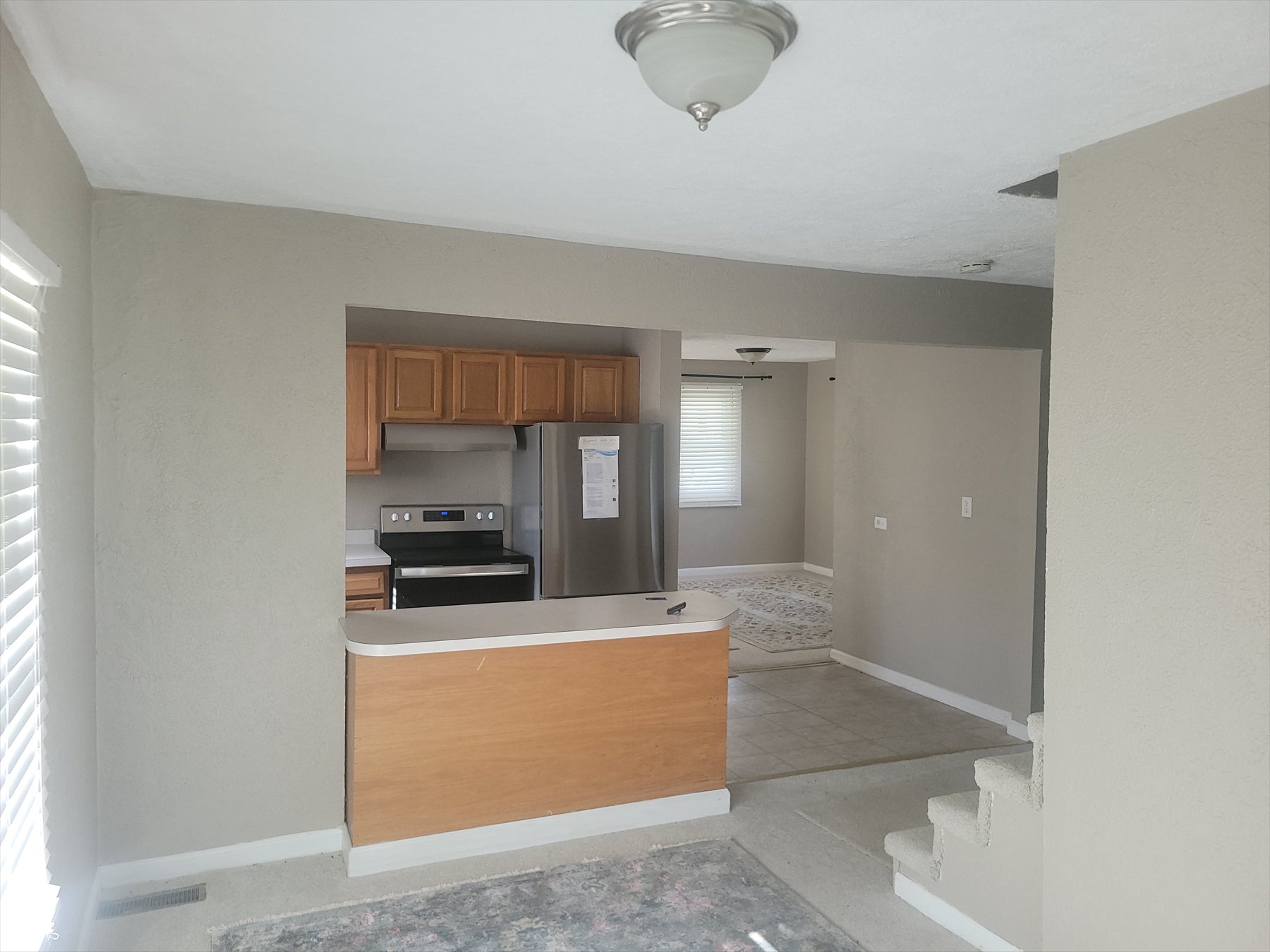
Inside, we observed signs of possible water damage around or behind shower wall panels. We did not open the walls or perform destructive testing, so the condition of concealed materials remained unknown.
Basement
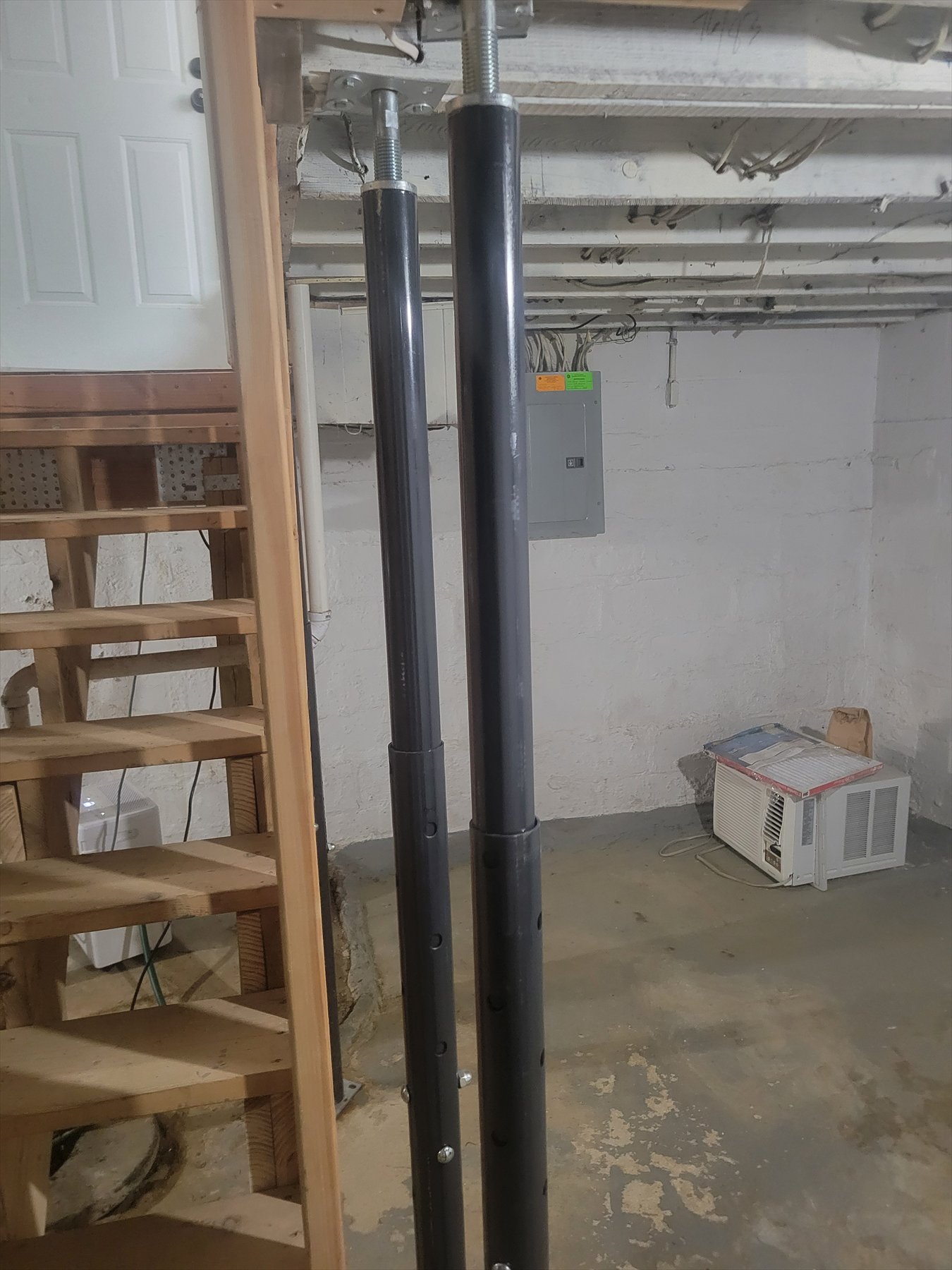
The basement raised additional questions. We observed an approximately half-inch gap between the stairs and basement floor, numerous support posts throughout the basement, and conditions that warranted further structural investigation.
We Buy Lansing is not a structural engineering firm. These were on-site observations, not professional findings of foundation failure or structural instability.
Drainage-related conditions, possible water-damage indicators, a stair-to-floor gap, and numerous basement support posts.
Hidden damage, the cause of any movement or moisture, or the adequacy of previous structural work.
A licensed structural engineer would need to evaluate the structural conditions.
3 · Available records
Reviewing Building and Permit History
We also reviewed available building and permit records. Those records indicated that structural concerns or related work dated back to at least 2018. They suggested that support posts had been added and that structural work had occurred previously.
Combined with the conditions we observed and the visible efforts to manage water around the property, the records raised questions about the building's structural history and the effectiveness of previous corrective measures.
The records did not tell us the full present condition of the structure. We did not treat them as an engineering report, and we did not infer specific defects, inspection outcomes, contractors, or repair requirements that the available information did not establish.
4 · Revised underwriting
Why the Underwriting Changed
The initial investment numbers were promising. The on-site observations and available records introduced risk that the preliminary screen could not fully price.
We had to account for potential structural repair costs, possible concealed water damage, future maintenance, uncertainty around previous structural work, the chance that the eventual repair scope would exceed our assumption, and the effect those issues could have on future resale or financing.
A property can look attractive on paper and still require a substantially different acquisition price once the risks become clearer.
The structural uncertainty was material because the investment depended on successfully resolving those concerns within the $30,000 preliminary allowance. If the actual scope were larger, both the potential equity spread and the investment return could decline quickly.
5 · Five-year model
How the Illustrative Return Was Calculated
We modeled a five-year, all-cash ownership scenario to understand the relationship between operating income, the potential equity spread, and an eventual sale. No debt financing was included.
| Input or output | Amount |
|---|---|
| Initial investment | $90,000 |
| Stabilized starting value | $120,000 |
| Annual appreciation | 3% |
| Annual NOI | $3,600, held constant |
| Holding period | 5 years |
| Selling expenses | 3% of terminal value |
| Projected terminal value | ~$139,113 |
| Projected net sale proceeds | ~$134,940 |
| Five years of operating cash flow | $18,000 |
| Projected nominal investment profit | ~$62,940 |
| Projected five-year unlevered IRR | ~11.9% |
The IRR uses cash flows of −$90,000 initially; $3,600 at the end of years one through four; and approximately $138,540 in year five, consisting of $3,600 of NOI plus approximately $134,940 of net sale proceeds. The calculated IRR is approximately 11.88%, rounded to 11.9%.
Internal rate of return, or IRR, is an annualized measure that considers the timing of the initial investment, annual cash flow, and estimated sale proceeds. It is a projection rather than a realized result.
The property offered a potential $30,000 equity spread after the assumed initial repairs, but only an approximately 4% initial annual unlevered operating yield. The modeled return depended substantially on buying below the estimated stabilized value and resolving the structural concerns within the assumed budget.
Our offer · Conditional
Why We Offered $60,000
Following our evaluation, We Buy Lansing made a $60,000 purchase offer contingent on a satisfactory structural engineering study.
The price reflected the expected acquisition basis, our preliminary structural repair allowance, potential stabilized value, rental economics, the risk of unknown structural conditions, and the return the investment would need to justify that risk.
The engineering contingency was important. A qualified professional would need to evaluate the structural conditions before we committed to the purchase. We did not complete an engineering study.
The seller accepted another offer.
We Buy Lansing did not purchase 3719 Homewood. This was not a completed renovation or rental investment.
For homeowners
What This Means for Lansing Homeowners
We evaluate properties throughout Greater Lansing, including houses with structural or foundation concerns, basement and water-management issues, significant repair needs, and properties already listed with real estate agents or affected by failed purchase offers.
We also evaluate properties marketed to other buyers and investors. For people interested in the investment side of the work, see how we work with Lansing real estate investors.
Not every property will meet our acquisition criteria. Our approach is to examine the property, consider the numbers and risks, and decide whether an acquisition makes sense. You can also review how our property evaluation and offer process works.
Transparency note
This case study documents an illustrative investment scenario for a property We Buy Lansing evaluated and made a conditional offer on but did not purchase. It is not a completed acquisition or a realized financial result.
The model excludes unforeseen structural repairs, other capital expenditures, acquisition and financing costs beyond the stated basis, owner-paid utilities if any, income taxes, depreciation and other tax benefits, and changes in rents, expenses, or market conditions. The $90,000 cost basis is a simplified acquisition-and-repair assumption, not a fully loaded closing-cost estimate. Actual results could be materially different.
The repair allowance, stabilized value, operating figures, appreciation, sale proceeds, profit, and IRR are preliminary underwriting assumptions and projections. They are not an engineering opinion, contractor's estimate, appraisal, investment recommendation, or guarantee.