
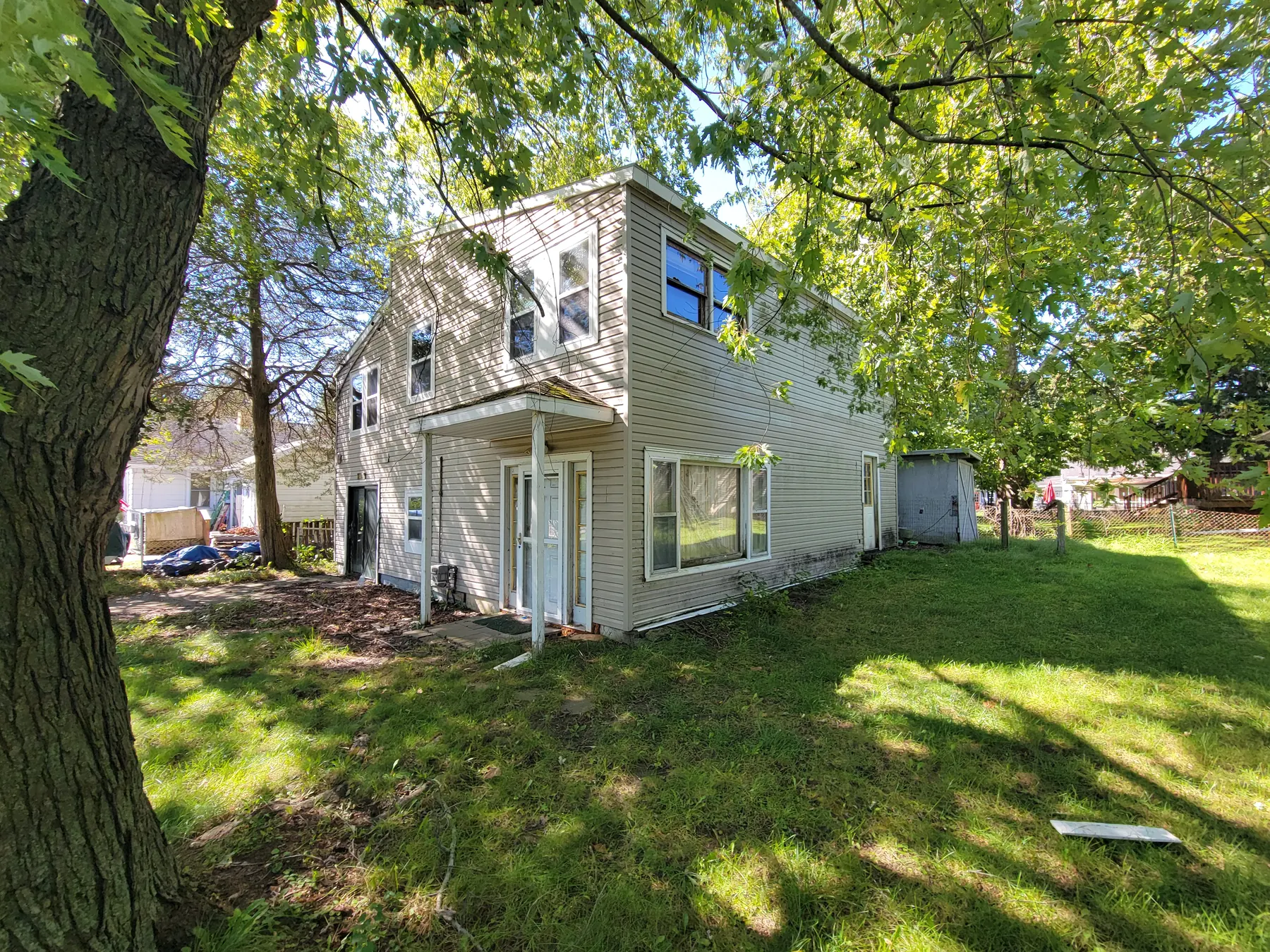
1 · The desktop screen
The Flip Was Already Thin
Before visiting the property, we screened the conventional fix-and-flip economics. Relevant finished homes in the immediate market generally suggested a finished value around approximately $180,000. For an optimistic sensitivity, we considered approximately $200,000.
There were no interior photographs available to us. Based on the visible exterior condition, we believed even a relatively modest rehabilitation could approach approximately $60,000.
| Underwriting assumption | Approximate amount |
|---|---|
| Optimistic after-repair value | $200,000 |
| Asking price | − $94,900 |
| Initial rehabilitation assumption | − $60,000 |
| Holding, sale and other costs | − $20,000 |
| Indicative preliminary spread | ~$25,000 |
These rounded figures were preliminary underwriting assumptions—not an appraisal, contractor bid, representation of future costs, or guarantee of value.
Even using an optimistic $200,000 exit, the conventional flip produced only roughly $20,000–$25,000 of preliminary spread. For a comparatively understandable rehabilitation project, we generally want approximately $30,000 or more. Before we ever entered the property, the conventional flip looked marginal and unattractive at the asking price.
2 · Why we kept looking
So Why Did We Go Look At It?
We did not inspect Elliott because we believed the conventional flip worked. During preliminary property research, we observed what appeared to be a prior quitclaim transfer around $30,000. We also did not identify an obvious existing mortgage during that preliminary review.
Those observations suggested that the seller might have flexibility that would not exist in a conventional financed acquisition. They did not establish the seller's willingness to accept any particular price or terms.
The thesis before the walkthrough
Seller-financed acquisition+Limited rehabilitation+Long-term rental| Working assumption | Approximate amount or structure |
|---|---|
| Potential acquisition | $80,000–$85,000 |
| Possible structure | Seller financing / seller-held note |
| Initial stabilization | $15,000–$20,000 |
| Conceptual exit | Hold as a rental |
This was an underwriting hypothesis. The seller did not agree to seller financing, an $80,000–$85,000 price, an interest rate, or any other terms.
A property that does not work as a conventional cash or loan acquisition can sometimes become attractive if the capital structure materially reduces the cash required and improves financing terms. We were investigating whether financing could create a different opportunity—not trying to force a marginal flip.
3 · The walkthrough
Then We Walked the Property
The physical inspection invalidated the limited-rehabilitation rental thesis. We observed substantial existing demolition and gutting, water-related concerns, roof and chimney concerns, building-envelope deterioration, evidence of animal intrusion, possible foundation or grade concerns, structural questions, and an unusual existing layout.
Those observations did not amount to an engineering conclusion. They identified unknown conditions that would require professional evaluation and made it difficult for us to determine how much of the existing building was economically worth retaining.
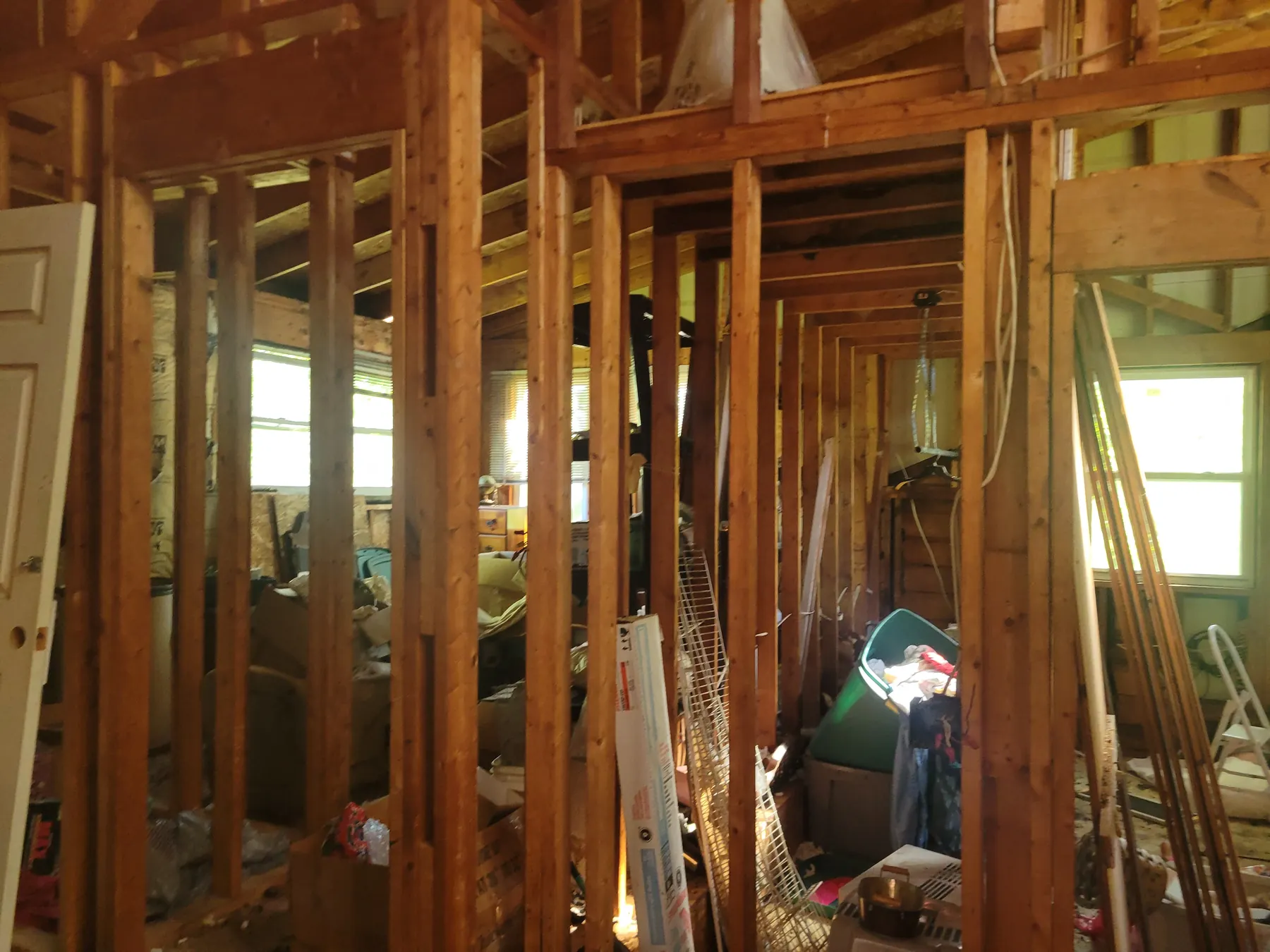
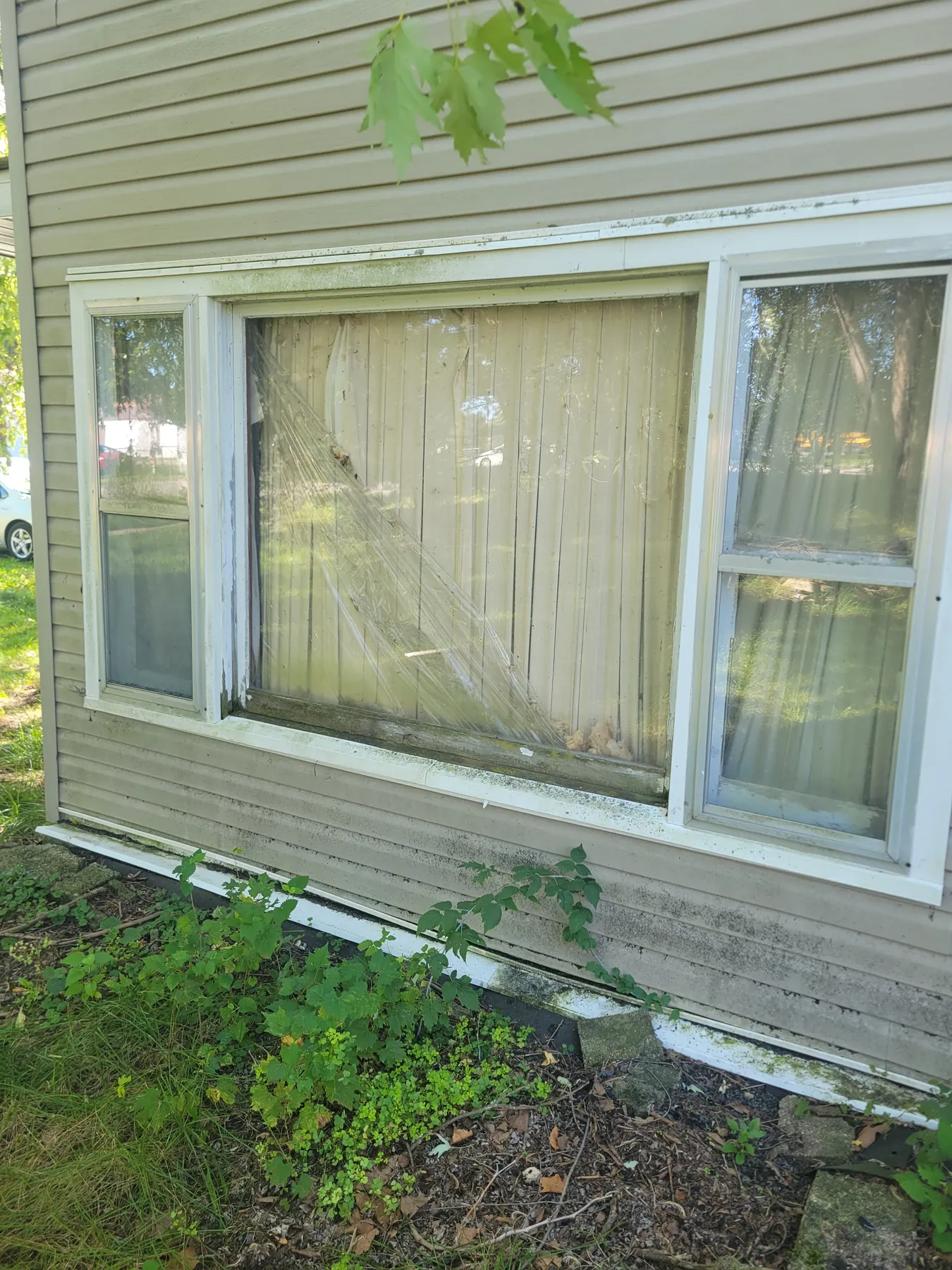
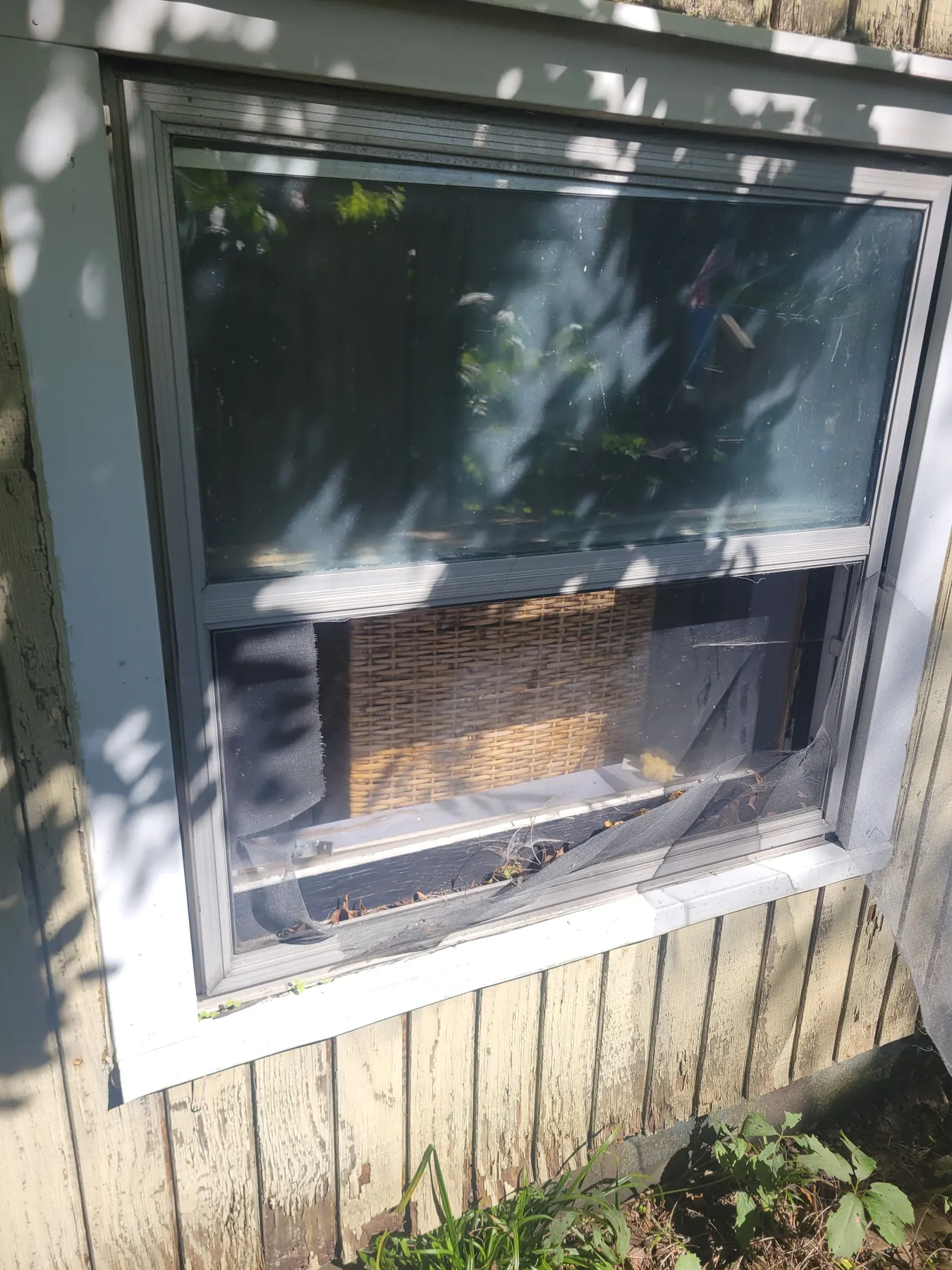
The original $15,000–$20,000 stabilization-and-rental thesis was no longer realistic.
4 · Rehabilitation question
Could We Still Rehabilitate It?
Potentially. But that is not the same question as whether we should.
An engineer could potentially determine that some or all of the existing structure is suitable for rehabilitation. We did not determine otherwise. “Possible to preserve” is not the same thing as “economically worth preserving.”
The unusual layout, substantial reconstruction already required, and unresolved questions involving water, structure, exterior envelope and other conditions moved our preliminary full-rehabilitation thought process toward roughly $70,000–$100,000 or more in construction and reconstruction.
That figure would sit on top of acquisition, financing, taxes, insurance, utilities, holding time, closing costs, resale costs, and contingency. Against a likely finished value around approximately $180,000–$200,000, the margin became extremely thin.
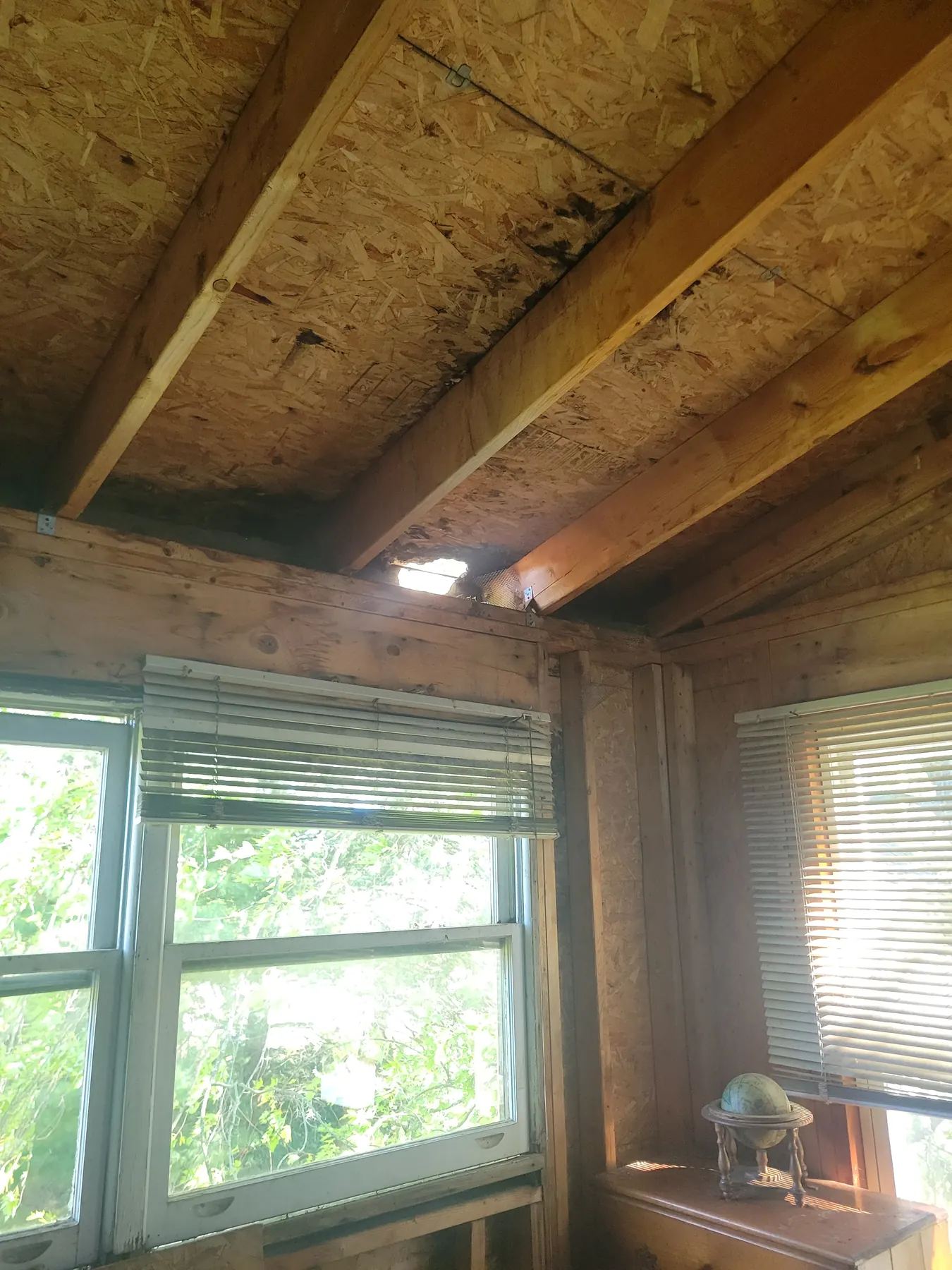
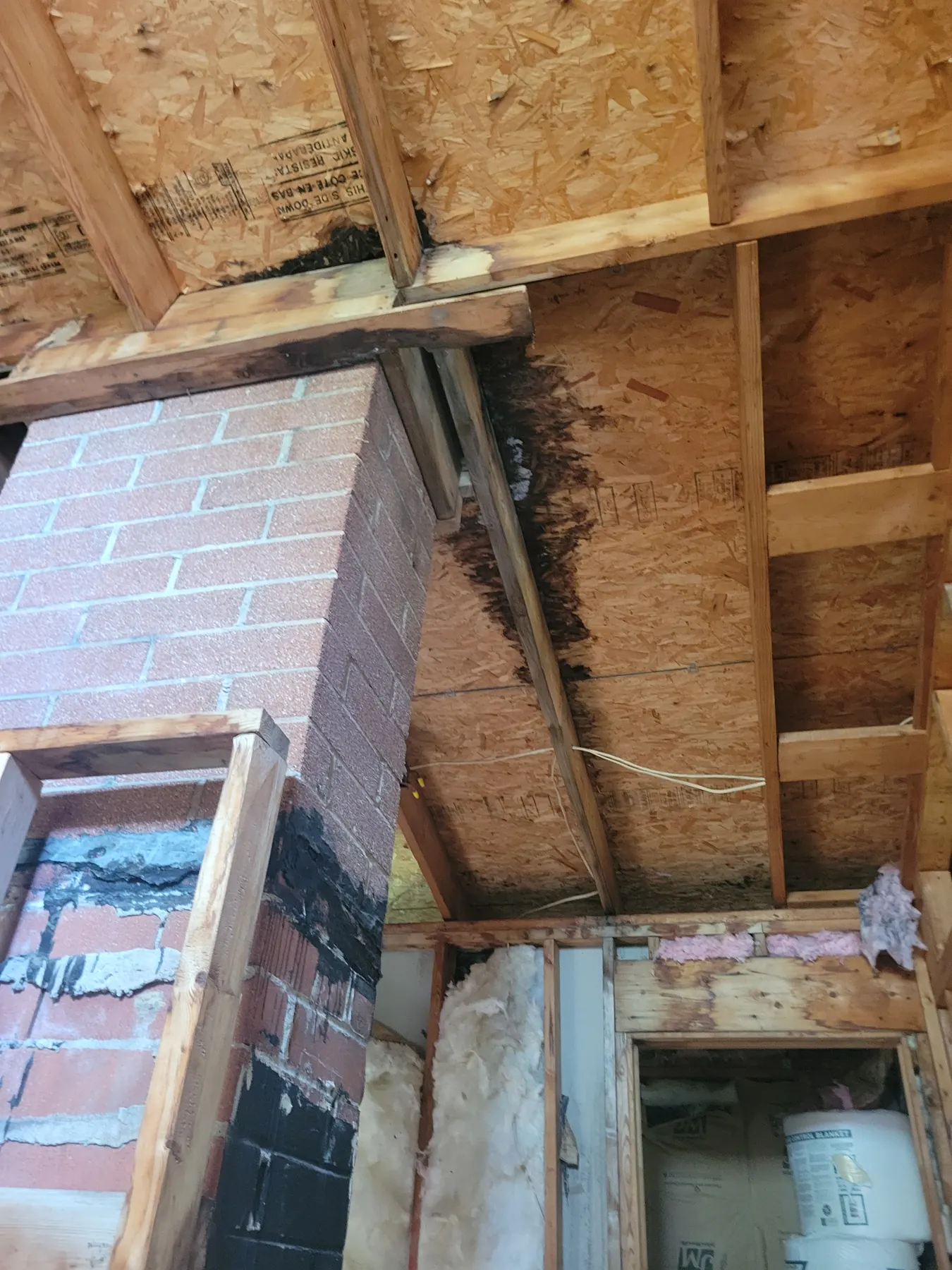
For a relatively understood rehabilitation, approximately $30,000 of projected margin might justify further consideration. Elliott's unresolved conditions required more margin, not less. If we required approximately $50,000–$60,000 to compensate for that uncertainty, the residual acquisition price could fall toward roughly $10,000–$30,000 depending on the actual scope.
At some point, every additional dollar spent preserving the existing structure has to compete against the alternative of redevelopment.
If we were going to spend six figures effectively recreating the house anyway, we had to ask why the existing structure should dictate the final product.
5 · The turning point
We Stopped Underwriting the House
Instead of asking how much the house would cost to fix, we started asking what the property could become.
The relevant questions changed: What did the parcel allow? What could physically fit? What might the finished product rent or sell for? What would it cost to create? What was the land worth under that scenario?
6 · The land and zoning question
Could the Site Support Something Better?
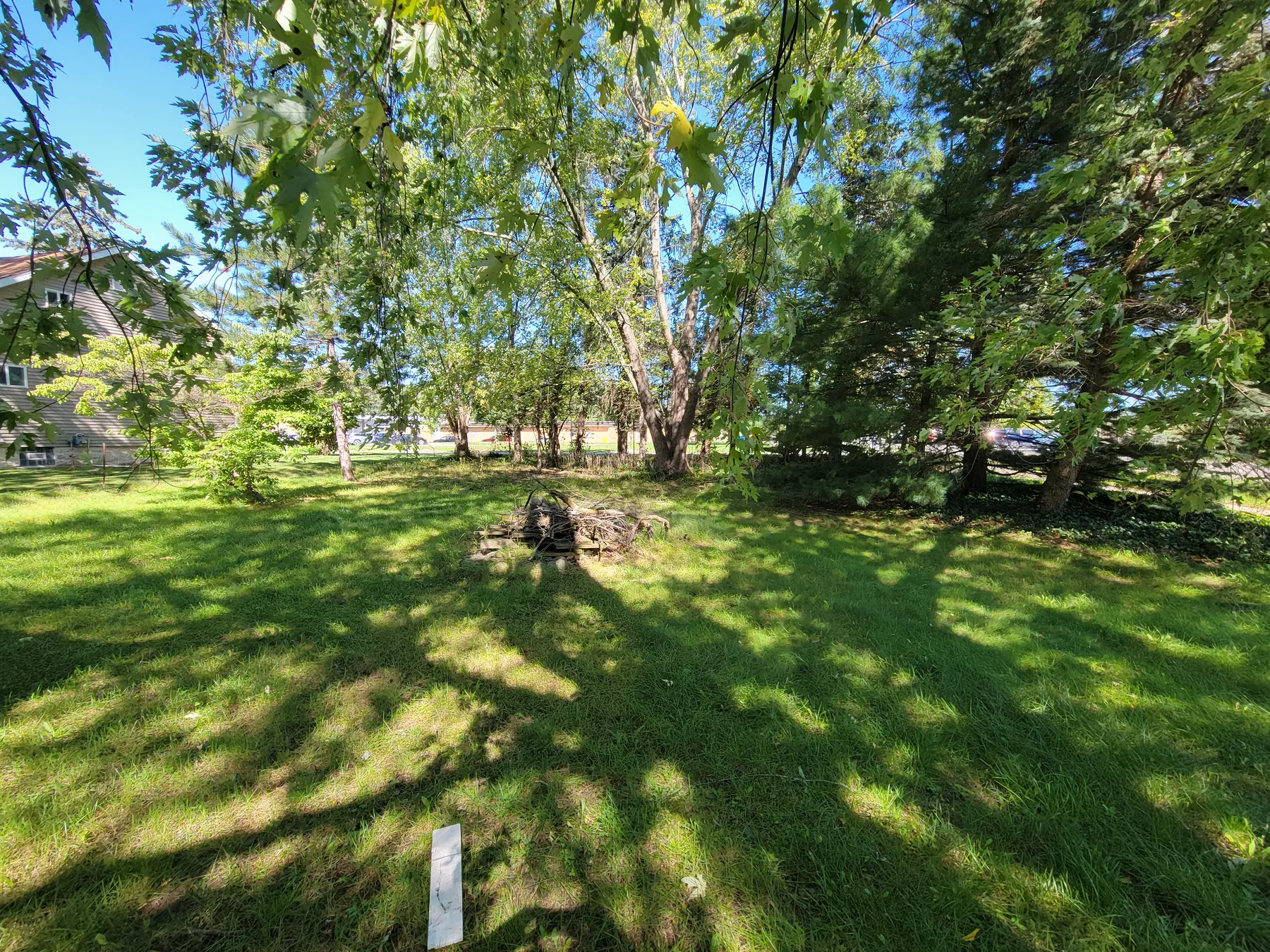
Our preliminary research identified the parcel as approximately 75 feet by 132 feet, about 0.23 acre, on a corner. Preliminary zoning research identified the property within Delhi Township's R-1D, One- and Two-Family High Density Residential district.
That made a two-family redevelopment plausible enough to investigate. It did not establish approval for a duplex on this parcel.
Any actual development would require confirmation of zoning interpretation, dimensional compliance, setbacks, corner-lot treatment, site layout, parking and access, utilities, municipal approval, and building and code requirements.
7 · Conceptual redevelopment
What If We Started Over?
Preliminary concept
- Units
- 2
- Size
- ~1,200 SF per unit · ~2,400 SF total
- Layout
- 3 bedrooms · 1.5 bathrooms per unit
- Product
- Simple rental-grade new construction
- Parking
- Surface parking · no garage assumed
| Income assumption | Amount |
|---|---|
| Base rent per unit | $1,800 / month |
| Total monthly rent | $3,600 |
| Gross scheduled annual rent | $43,200 |
| Upside sensitivity | $2,000 / unit / month |
Nearby rental and multifamily evidence informed the preliminary range. The $1,800 base rent remains an underwriting assumption for a hypothetical new product; the $2,000 figure is only an upside sensitivity.
8 · Conceptual development cost
The Number We Had the Least Confidence In
This was the weakest part of our analysis. We have meaningful experience evaluating residential acquisitions and rehabilitation. Ground-up development is not currently one of our highest-confidence operating competencies, so our error range around this budget was substantially wider.
| Conceptual cost | Approximate amount |
|---|---|
| Acquisition / land | $50,000 |
| Demolition / clearing | $15,000 |
| Site work / utilities | $15,000 |
| Foundation / concrete | $25,000 |
| Framing / structure | $45,000 |
| Roof / exterior / windows | $35,000 |
| Plumbing | $22,000 |
| Electrical | $18,000 |
| HVAC | $18,000 |
| Insulation / drywall | $15,000 |
| Kitchen / baths / finishes | $50,000 |
| Parking / final site | $12,000 |
| Plans / engineering / permits | $12,000 |
| Contingency | ~$28,000 |
| Conceptual all-in basis | ~$360,000 |
The listed conceptual amounts total approximately $360,000. They are rounded screening assumptions, not bids or a promise that the project could be delivered at that cost.
9 · The income side
What Could the Completed Asset Produce?
At the $1,800-per-unit base rent, gross scheduled rent would be approximately $43,200 annually. After a roughly 5% vacancy assumption and normalized operating expenses, our conceptual screen produced estimated net operating income of approximately $27,000 annually.
Yield on cost measures the stabilized property income against what it cost to create the asset. It is useful here because it lets us compare the income produced with the conceptual development basis.
10 · Conceptual stabilized value
Development Economics Started to Look More Interesting
Our preliminary review of nearby multifamily transactions suggested that 6% could be used as a rough stabilized capitalization-rate assumption for screening. That was a preliminary market inference—not a definitive market cap rate, appraisal conclusion, or guaranteed exit cap.
| Calculation | Approximate result |
|---|---|
| Estimated NOI | $27,000 |
| Conceptual stabilized cap rate | 6.0% |
| Stabilized value: $27,000 ÷ 0.06 | ~$450,000 |
| Less conceptual basis | − $360,000 |
| Conceptual value created | ~$90,000 |
11 · Why we passed
$90,000 Sounds Good. Why Pass?
If approximately $90,000 of equity were required and approximately $90,000 of genuine value could be created in roughly a year, leveraged equity economics could potentially be attractive. The issue was confidence.
We weren't willing to treat uncertainty as profit.
The major uncertain variables included actual construction cost, demolition scope, entitlement and site-plan feasibility, site conditions, structural reuse versus complete demolition, utility and site costs, construction timeline, achievable new-construction rent, stabilized expenses, stabilized value, and financing and carry.
A $30,000 cost overrun materially changes the result. A lower NOI materially changes stabilized value. A delay increases carrying costs. Several modest misses occurring together could consume much of the conceptual spread.
The projected return could potentially be attractive. Our confidence in producing that return was not high enough.
12 · Operator sensitivity
Another Developer Could Reach a Different Conclusion
We are not claiming Elliott is a bad development. If an experienced local developer can support a materially lower basis using actual bids, completed comparable projects, demonstrated cost history, entitlement experience, reliable crews, a credible construction timeline, and appropriate contingency, the opportunity changes materially.
| Conceptual metric | Approximate result |
|---|---|
| All-in development basis | $300,000 |
| Estimated NOI | $27,000 |
| Yield on cost | 9.0% |
| Value at hypothetical 6% cap | ~$450,000 |
| Conceptual value created | ~$150,000 |
| Development spread | ~300 basis points |
The same property can represent very different risk to different operators.
13 · A different possible role
The Opportunity May Still Matter Even If We Aren't the Developer
An experienced developer could potentially bring us a future opportunity like this rather than us executing the construction ourselves. Our role would then be different.
Instead of underwriting our own ability to manage the development, we could evaluate the property, proposed project, developer experience, completed comparable projects, construction budget and bids, developer equity, loan-to-cost, loan-to-value, contingency, entitlement status, projected rents, stabilized value, downside protection, and refinance or sale exit.
We don't have to be the operator of every opportunity we understand.
This describes how we might think about a future opportunity. It is not an offer of securities, a solicitation of public investment, a public lending product, or a promise of financing.
Final decision
Pass on Acquisition
Economics did not provide sufficient margin.
Underwriting confidence: relatively highThe required rehabilitation did not justify the projected rental economics.
Underwriting confidence: relatively highPreliminary economics suggested possible value creation, but our confidence in ground-up development cost and execution was insufficient.
Underwriting confidence: lowNot every distressed property is an investor special. Sometimes the existing structure is worth rehabilitating. Sometimes it is not. And sometimes the more valuable question is not “How much will this house cost to fix?” It is “What could this property become—and are we the right people to execute it?”
At 2077 Elliott Street, we did not need to prove that no opportunity existed. We needed to decide whether the opportunity justified our capital, risk, and level of confidence. For us, it did not. So we passed.
An experienced developer may reach a different conclusion. That is part of disciplined underwriting too.
Good underwriting doesn't make every deal work. It tells us when not to force one.